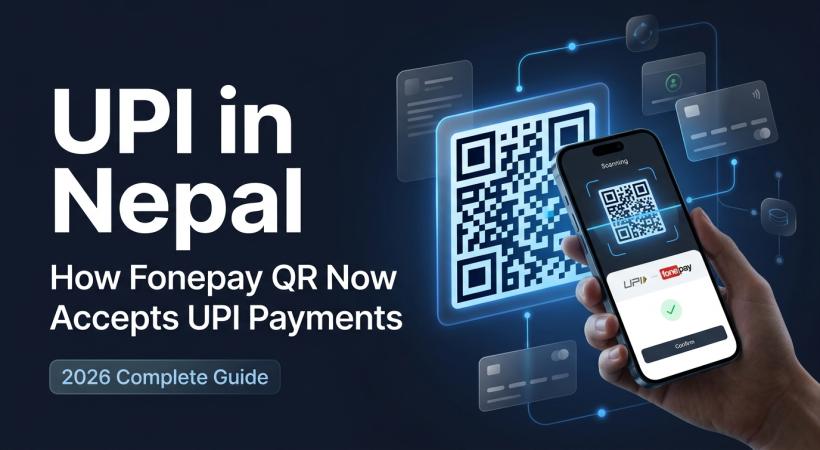
UPI in Nepal: How Fonepay QR Now Accepts UPI Payments (2026 Complete Guide)
In a major milestone for South Asia’s digital economy, UPI now works in Nepal.
Indian visitors can scan a Nepali Fonepay QR and pay instantly using their UPI apps. This cross-border payment integration is reshaping tourism spending, merchant acceptance, and the future of digital payments in Nepal.
In this SEO-optimized 2026 guide, we explain:
• How UPI works in Nepal
• The role of Fonepay QR
• What it means for merchants
• Cross-border payment implications
• Future opportunities for Nepal’s payment ecosystem
> What Is UPI?
UPI (Unified Payments Interface) is India’s real-time payment system developed by the National Payments Corporation of India and regulated by the Reserve Bank of India.
UPI enables:
• Instant bank-to-bank transfers
• QR code merchant payments
• 24/7 real-time transactions
• Low-cost digital payments
• Mobile-first authentication
It has become one of the world’s largest real-time payment systems.
Now, UPI has officially expanded into Nepal through QR interoperability.
> How UPI Works in Nepal
UPI payments in Nepal operate through integration with Fonepay, Nepal’s major QR payment network.
Here’s how it works:
• A Nepali merchant displays a Fonepay QR.
• An Indian customer scans the QR using a UPI app (such as Google Pay, PhonePe, Paytm, BHIM, etc.).
• The transaction is processed instantly.
• The merchant receives settlement in NPR.
This creates seamless cross-border QR-based payments between India and Nepal.
> What This Means for Nepali Merchants
If you are a business owner in Nepal, this development is significant.
✔ Access to Indian Tourists
Indian visitors can now pay digitally without exchanging cash or using international cards.
✔ Faster Checkout
UPI-based QR payments are instant, reducing waiting time at counters.
✔ Increased Spending
Lower payment friction often leads to higher tourist spending in:
• Hotels
• Restaurants
• Retail shops
• Travel services
• Local tourism experiences
✔ Reduced Cash Handling
Merchants can reduce risks related to cash storage and reconciliation.
> Is UPI Available Everywhere in Nepal?
UPI works where Fonepay QR is enabled and configured for cross-border acceptance.
Important clarifications:
• Not all QR codes in Nepal automatically accept UPI.
• Fonepay-enabled merchant QRs are the primary acceptance points.
• Settlement happens in NPR for Nepali merchants.
• The system currently supports Indian UPI users paying in Nepal.
It is not yet fully bidirectional for all Nepali users paying in India (subject to regulatory expansion).
> Regulatory and Infrastructure Framework
Digital payment systems in Nepal are regulated by Nepal Rastra Bank.
Cross-border payment integration requires:
• Regulatory approvals
• AML and compliance frameworks
• Foreign exchange management
• Interbank settlement coordination
The activation of UPI in Nepal reflects strong bilateral financial coordination and infrastructure readiness.
> How This Impacts Nepal’s Digital Payment Future
UPI integration signals several long-term shifts:
1. Stronger Cross-Border Payment Ecosystem
Nepal is becoming more integrated into regional digital payment systems.
2. Growth of QR Interoperability
QR-based payments are now more powerful than ever, bridging two national systems.
3. Boost for Tourism Economy
Digital convenience improves visitor spending experience.
4. Push Toward API-Driven Infrastructure
Future payment innovation in Nepal will likely focus on:
• Standardized APIs
• Real-time settlements
• Enhanced fraud detection
• Interoperable banking systems
> UPI vs Nepal’s Existing Digital Payment System
Nepal already has strong wallet and QR infrastructure, including:
• eSewa
• Khalti
• IME Pay
• Fonepay
UPI integration does not replace these systems.
Instead, it enhances interoperability and expands payment options for international users.
> What Businesses Should Do Now
If you operate in Nepal, take these steps:
✔ Confirm your Fonepay QR supports cross-border UPI acceptance
✔ Display “UPI Accepted Here” signage
✔ Train staff to guide Indian customers
✔ Monitor transaction reports
✔ Upgrade to API-based payment integration for scalability
Early adoption gives competitive advantage — especially in tourism-heavy regions.
> The Bigger Picture: Digital Payment Trends in Nepal (2026)
With UPI now operational via Fonepay QR, Nepal is entering a new era of digital finance.
Expected trends:
• Expansion of cross-border QR payments
• Stronger interoperability between banks
• Real-time regional payment corridors
• Increased fintech collaboration
• Growth in cashless tourism
Businesses that invest in scalable, mobile-first payment systems today will benefit most from this transformation.
> Final Conclusion
Yes — UPI now works in Nepal through Fonepay QR integration.
Indian visitors can make instant digital payments at Nepali merchants using their UPI apps. This marks a major step in cross-border digital payment interoperability between Nepal and India.
For merchants and digital businesses, this is not just a technical update — it is a strategic opportunity.
Nepal’s digital payment ecosystem is evolving rapidly.
Those who adapt early will lead the next phase of growth.