Payment Idempotency Explained: Preventing Duplicate Transactions in APIs
In modern digital payment systems, reliability is just as important as speed. When a customer clicks the “Pay” button, the payment system must ensure that the transaction is processed exactly once — no duplicates, no accidental double charges.
However, in distributed systems and unstable network environments, repeated API requests can occur. Without proper safeguards, this can lead to duplicate transactions.
This is where payment idempotency becomes essential.
In this developer-focused guide, we explain what payment idempotency is, how it works, and why it is critical for preventing duplicate payments in modern payment APIs.
> What Is Payment Idempotency?
Payment idempotency is a technique used in APIs to ensure that multiple identical requests produce the same result without creating duplicate transactions.
In simple terms, idempotency guarantees that even if a payment request is sent multiple times, the payment system will process it only once.
For example:
If a payment request is submitted twice due to network retries, the API recognizes the duplicate request and returns the original transaction result instead of creating a new payment.
> Why Duplicate Transactions Happen
Duplicate payment requests can occur due to several technical reasons.
- Network Timeouts
A customer clicks “Pay,” but the response takes too long. The application retries the request automatically.
- User Double Clicks
Sometimes customers click the payment button multiple times.
- API Retry Mechanisms
Backend systems may retry requests automatically when they do not receive a response.
- Mobile Connectivity Issues
Mobile networks may interrupt communication between the client and server.
Without idempotency protection, these situations could generate multiple payment requests.
> How Payment Idempotency Works
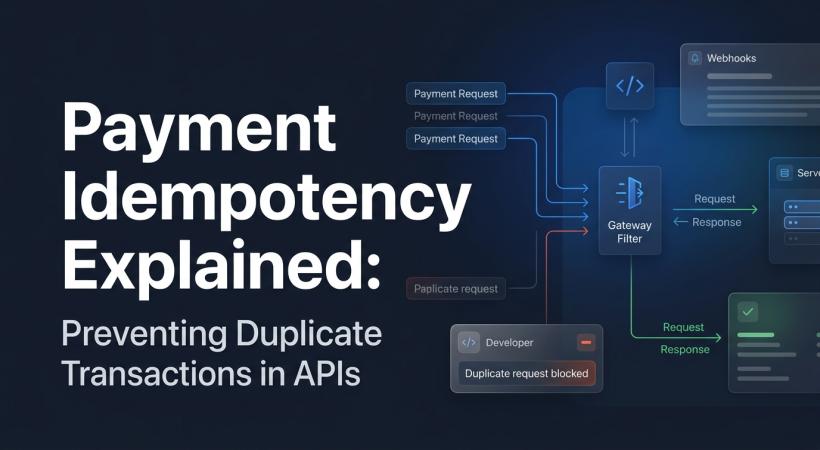
Payment APIs implement idempotency by using a unique request identifier, often called an Idempotency Key.
- Typical Idempotency Flow
1. The client generates a unique idempotency key.
2. The payment request is sent with this key.
3. The payment gateway stores the request and its response.
4. If the same key is used again, the gateway returns the original response instead of processing the payment again.
This ensures that the transaction is executed only once.
Example of an Idempotent Payment Request
A typical API request with idempotency may include a header like this:
Idempotency-Key: 8f6a9c1d-3e41-4d72-9d11-a6b2d3f9c345
If the same request is repeated using the same key, the payment system recognizes it as a duplicate and avoids creating another transaction.
> Benefits of Payment Idempotency
Implementing idempotency provides several advantages for payment systems.
- Prevents Double Charges
Customers are protected from accidental duplicate payments.
- Improves API Reliability
Retry mechanisms can safely resend requests without risk.
- Better User Experience
Customers do not see confusing duplicate transactions.
- Stronger Payment System Stability
Idempotent APIs handle network failures gracefully.
> Payment Idempotency in Nepal’s Digital Payment Ecosystem
Nepal’s digital payment environment includes several major platforms operating under the regulatory framework of Nepal Rastra Bank.
Popular payment systems include:
• Fonepay
• eSewa
• Khalti
• IME Pay
As payment APIs become more widely integrated into websites and mobile apps, idempotency becomes a crucial component of secure and reliable payment processing.
> Idempotency vs Transaction Validation
Some developers mistakenly assume transaction validation alone prevents duplicates.
However, the two concepts serve different purposes.
| Feature | Idempotency | Transaction Validation |
|---|---|---|
| Prevents duplicate requests | Yes | No |
| Handles API retries | Yes | No |
| Ensures payment uniqueness | Yes | Partially |
Idempotency specifically protects against repeated requests caused by network failures or retries.
> Best Practices for Implementing Payment Idempotency
Developers should follow several best practices when implementing idempotent payment APIs.
- Use Unique Idempotency Keys
Each payment request must have a unique key.
- Store Request Results
The system must store the response associated with each key.
- Set Expiration Policies
Idempotency records should expire after a certain period.
- Protect Against Key Collisions
Ensure keys are sufficiently random and unique.
- Combine with Webhooks
Webhook notifications confirm the final transaction status.
> Real-World Use Cases of Payment Idempotency
Payment idempotency is used across many fintech systems.
- eCommerce Checkout
Ensures that a customer clicking “Pay” multiple times does not generate duplicate orders.
- Mobile Payment Apps
Handles retry attempts caused by unstable mobile connections.
- Subscription Billing
Prevents duplicate charges during automated recurring payments.
- Payment Gateway APIs
Ensures safe retry logic in distributed systems.
> Why Idempotency Is Critical for Payment API Safety
Modern payment infrastructure operates across multiple systems:
• Client applications
• Merchant servers
• Payment gateways
• Banking networks
• Failures can occur at any point in this chain.
Idempotency ensures that even if communication fails or requests are retried, the payment system remains consistent and reliable.
> Future of Payment API Architecture
As digital commerce grows, payment infrastructure is becoming more sophisticated.
Future systems will rely heavily on:
• Idempotent APIs
• Event-driven architectures
• Real-time payment confirmations
• Automated fraud detection
Developers who design payment systems with idempotency from the beginning will build more resilient and scalable fintech platforms.
> Conclusion
Payment idempotency is a critical concept in modern payment API design. By ensuring that duplicate requests do not create duplicate transactions, idempotency protects both merchants and customers from accidental double payments.
For developers building payment-enabled applications in Nepal, implementing idempotent APIs is essential for maintaining secure, reliable, and user-friendly payment systems.
As Nepal’s fintech ecosystem continues to expand, robust API practices such as idempotency will play a vital role in ensuring stable digital payment infrastructure.