Payment Tokenization Explained: The Future of Secure Online Payments (Nepal Guide)
As digital payments continue to grow, security has become one of the most important concerns for businesses and customers alike. Data breaches, card fraud, and identity theft have pushed payment providers to develop stronger protection mechanisms.
One of the most advanced security technologies used today is payment tokenization.
In this guide, we explain what payment tokenization is, how it works, and why it represents the future of secure online payments in Nepal and around the world.
> What Is Payment Tokenization?
Payment tokenization is a security technology that replaces sensitive payment information—such as card numbers—with a unique, randomly generated token.
Instead of storing or transmitting the actual card details, systems use this token during transactions.
This means the real card data is never exposed during the payment process.
Example
Original card number: 4111 1234 5678 9012
Tokenized version used for transaction: 9F7A-4B2C-8D19-XY23
Even if hackers access the token, it cannot be used outside the specific payment system.
> Why Tokenization Is Important for Online Payments
Traditional payment systems often required merchants to store card data, which increased the risk of security breaches.
Tokenization eliminates this risk by ensuring that sensitive card information is never stored on merchant servers.
- Key Benefits
1. Stronger Security
Tokenized data cannot be reused or reverse-engineered to obtain the original card details.
2. Reduced Fraud Risk
Even if transaction data is intercepted, the token is useless outside its intended environment.
3. Safer Data Storage
Merchants avoid storing sensitive financial information.
4. Regulatory Compliance
Tokenization helps businesses comply with security standards such as PCI-DSS.
> How Payment Tokenization Works
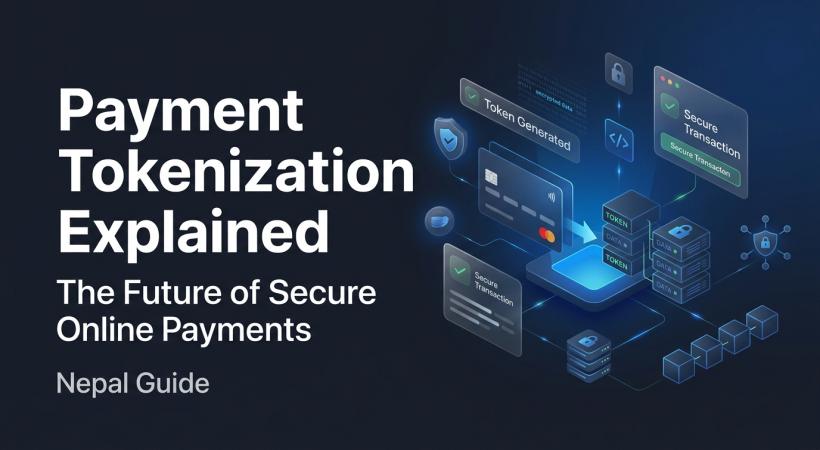
The tokenization process happens behind the scenes in milliseconds.
- Step-by-Step Flow
A customer enters card details on a payment page.
1. The payment gateway sends the card information to a secure tokenization server.
2. The system generates a unique token representing the card.
3. The token is returned to the merchant’s system.
4. Future transactions use the token instead of the real card data.
The actual card number is securely stored in a protected vault maintained by the payment provider.
> Tokenization vs Encryption
Many people confuse tokenization with encryption, but they serve different purposes.
| Feature | Tokenization | Encryption |
|---|---|---|
| Data Replacement | Yes | No |
| Reversible | No | Yes (with key) |
| Stored Data | Token only | Encrypted data |
| Security Level | Very high | High |
Tokenization removes sensitive data entirely from merchant systems, while encryption only disguises it.
> Where Payment Tokenization Is Used
Tokenization is widely used across modern payment systems.
- eCommerce Platforms
Online stores use tokenization to safely process card payments without storing sensitive information.
- Subscription Services
Streaming platforms, SaaS products, and memberships use tokenization for recurring billing.
- Mobile Wallets
Digital wallets tokenize card details before storing them on devices.
- Contactless Payments
NFC payments often rely on tokenization for added security.
- Payment Security in Nepal’s Digital Ecosystem
Nepal’s digital payment environment is regulated by Nepal Rastra Bank and supported by several digital payment platforms.
Major payment systems include:
• Fonepay
• eSewa
• Khalti
• IME Pay
As online payments expand in Nepal, advanced security technologies like tokenization will become increasingly important for protecting both merchants and customers.
> Why Tokenization Is the Future of Payment Security
Digital commerce is growing rapidly, and cyber threats are becoming more sophisticated.
Tokenization addresses many of the risks associated with traditional card processing.
Key Reasons Tokenization Is the Future
✔ Eliminates sensitive data exposure
✔ Protects against large-scale data breaches
✔ Supports secure recurring payments
✔ Improves customer trust
✔ Enables safer global payment processing
Because of these advantages, many modern payment gateways now use tokenization as a core security layer.
> Benefits of Tokenization for Businesses
Businesses that adopt tokenization gain several operational advantages.
- Reduced Compliance Burden
Since sensitive card data is not stored on merchant servers, compliance requirements become simpler.
- Lower Fraud Liability
Tokenized transactions are harder for attackers to exploit.
- Improved Customer Experience
Customers can save payment methods safely without repeatedly entering card details.
- Support for Subscription Billing
Tokenization allows businesses to charge customers automatically without storing raw card data.
> Common Misconceptions About Tokenization
Some businesses misunderstand how tokenization works.
“Tokenization stores card data on the merchant server”
False. The real card information is stored in secure vaults managed by payment providers.
“Tokens can be reused anywhere”
False. Tokens only work within the specific payment system that generated them.
“Tokenization replaces encryption”
Not exactly. Most payment systems use both encryption and tokenization together for maximum security.
> Future of Secure Payments in Nepal
As Nepal’s digital economy expands, payment systems will increasingly adopt advanced security technologies.
Future developments may include:
• Wider adoption of tokenized card storage
• Stronger fraud monitoring systems
• API-driven payment security layers
• Secure digital wallet infrastructure
Businesses that implement secure payment technologies today will be better prepared for the next generation of digital commerce.
> Conclusion
Payment tokenization is one of the most powerful technologies protecting modern online transactions. By replacing sensitive card data with secure tokens, it significantly reduces fraud risks and improves overall payment security.
For businesses and developers in Nepal, understanding tokenization is essential for building secure payment systems and maintaining customer trust.
As digital payments continue to evolve, tokenization will play a central role in shaping the future of secure online commerce.