Soft Declines vs Hard Declines in Online Payments
Soft Declines vs Hard Declines in Online Payments (And How Businesses Can Reduce Payment Failures)
Online payments are designed to be fast and seamless, but sometimes transactions fail during the authorization process. When this happens, the payment is declined by the issuing bank or payment network.
For businesses operating online, payment declines can lead to lost sales, frustrated customers, and reduced conversion rates.
Understanding the difference between soft declines and hard declines helps merchants and developers diagnose payment failures and improve payment success rates.
In this guide, we explain the key differences between soft declines and hard declines, common causes, and practical strategies to reduce payment authorization failures.
> What Is a Payment Decline?
A payment decline occurs when a payment request is rejected by the issuing bank or payment processor during the authorization stage.
During authorization, the payment system verifies:
• Whether the card or wallet is valid
• Whether sufficient balance is available
• Whether the transaction is legitimate
If any issue is detected, the transaction may be declined.
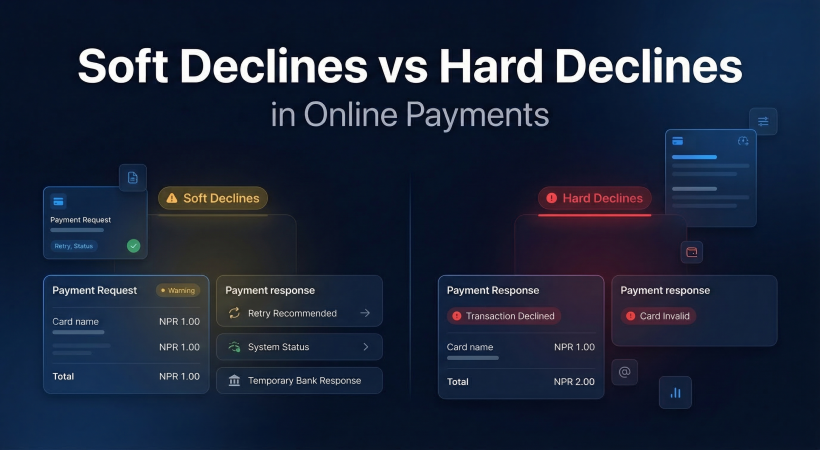
Payment declines are generally categorized into two types: soft declines and hard declines.
> What Is a Soft Decline?
A soft decline occurs when a payment fails temporarily but may succeed if the transaction is retried.
Soft declines usually happen because of temporary issues rather than permanent restrictions.
• Common Causes of Soft Declines
• Temporary bank server issues
• Network connectivity problems
• Transaction timeouts
• Authentication failures
• Security verification requirements
For example, if the bank requires additional verification or if the payment gateway cannot reach the bank server, the transaction may be temporarily declined.
In many cases, retrying the transaction after a short delay can resolve the issue.
> What Is a Hard Decline?
A hard decline occurs when a payment is permanently rejected by the issuing bank.
In this case, retrying the same transaction will not succeed unless the customer changes the payment method or resolves the issue with the bank.
Common Causes of Hard Declines
• Insufficient funds
• Invalid card number
• Expired card
• Blocked or stolen card
• Bank fraud detection rules
Hard declines indicate that the transaction cannot be approved under current conditions.
> Key Differences Between Soft Declines and Hard Declines
| Feature | Soft Decline | Hard Decline |
|---|---|---|
| Retry Possible | Yes | No |
| Cause | Temporary issue | Permanent issue |
| Resolution | Retry transaction | Change payment method |
| Impact | Minor disruption | Transaction failure |
Understanding this distinction allows businesses to design smarter payment retry strategies.
> Why Payment Declines Matter for Online Businesses
Payment declines directly affect revenue and customer experience.
- Lost Sales
Customers may abandon their purchase if the payment fails.
- Reduced Conversion Rates
Even small decline rates can significantly impact checkout performance.
- Customer Frustration
Users may lose trust in the platform if payment failures occur repeatedly.
> Payment Declines in Nepal’s Digital Payment Ecosystem
Nepal’s digital payment infrastructure operates under the regulatory oversight of Nepal Rastra Bank.
Major payment platforms include:
• Fonepay
• eSewa
• Khalti
• IME Pay
As digital transactions increase, understanding payment declines becomes important for merchants integrating payment gateways and APIs.
> How Businesses Can Reduce Payment Declines
Although some declines are unavoidable, businesses can take several steps to improve payment success rates.
- Offer Multiple Payment Options
Providing wallet payments, QR payments, and bank options increases the chances of successful transactions.
- Optimize Checkout Flow
Reduce unnecessary steps in the payment process to prevent timeouts.
- Implement Smart Retry Logic
Retry payments automatically for soft declines after a short delay.
- Monitor Payment Success Rate
Tracking authorization success helps detect issues early.
- Ensure Stable API Integration
Reliable payment API integration prevents unnecessary transaction failures.
> How Developers Can Handle Declines in Payment APIs
Developers should implement proper error handling mechanisms in payment systems.
- Detect Decline Type
The API response should indicate whether the decline is soft or hard.
- Retry Soft Declines
Retry the transaction after a short delay.
- Notify Users Clearly
Display clear error messages explaining why the payment failed.
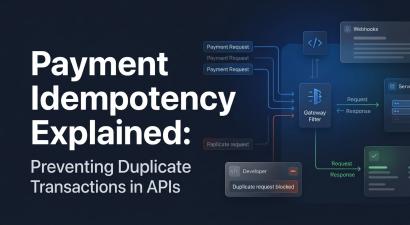
- Use Idempotency
Idempotent APIs prevent duplicate transactions during retries.
> Future of Payment Optimization
As payment systems become more advanced, new technologies are improving payment approval rates.
These include:
• Smart payment routing
• AI-driven fraud detection
• Improved authentication systems
• Real-time transaction monitoring
These innovations help reduce unnecessary declines and improve transaction success rates.
> Conclusion
Payment declines are a natural part of digital payment systems, but understanding the difference between soft declines and hard declines allows businesses to manage them effectively.
Soft declines are temporary and can often be resolved by retrying the transaction, while hard declines require customers to change payment methods or contact their bank.
By implementing better payment infrastructure, monitoring transaction success rates, and improving API integration, businesses can significantly reduce payment failures and deliver a smoother checkout experience.