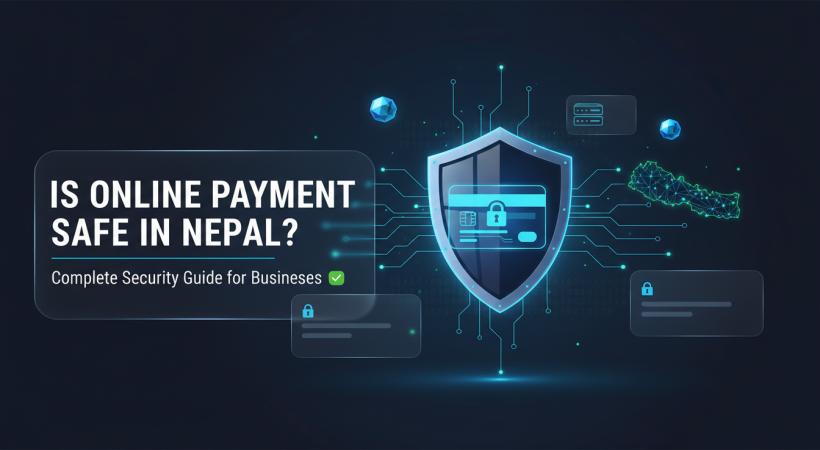
Is Online Payment Safe in Nepal? Complete Security Guide for Businesses
Online transactions are growing rapidly across Nepal. From eCommerce stores and SaaS platforms to ticketing systems and service providers, businesses now depend heavily on digital payments.
But one critical question remains:
Is online payment safe in Nepal?
The short answer: Yes - online payment is safe in Nepal when businesses use a secure and properly implemented payment gateway.
However, security depends on infrastructure, API implementation, encryption standards, and compliance practices.
This guide explains everything businesses need to know about:
• Secure payment gateway Nepal standards
• Online payment security Nepal mechanisms
• Digital payment safety Nepal risks
• PCI compliance Nepal requirements
How to protect your business from payment fraud
> Online Payment Security Nepal – How It Actually Works
Online payment security in Nepal relies on multiple layers of protection.
A secure digital transaction typically includes:
• HTTPS (SSL/TLS) encrypted communication
• Secure API authentication
• Tokenization of sensitive data
• Server-side transaction verification
• Callback validation
• Fraud monitoring systems
• Access control restrictions
When properly implemented, these layers ensure digital payment safety Nepal for both businesses and customers.
Security failures usually occur due to poor integration — not because the system itself is unsafe.
> Secure Payment Gateway Nepal – What to Look For
When choosing a secure payment gateway Nepal, businesses should evaluate the following:
1. End-to-End Encryption
All transaction data must be encrypted during transmission using SSL/TLS protocols.
Encryption prevents:
• Data interception
• Man-in-the-middle attacks
• Credential theft
If your payment page is not HTTPS secured, it is not safe.
2. PCI Compliance Nepal – Why It Matters
PCI DSS (Payment Card Industry Data Security Standard) is an international security framework designed to protect cardholder data.
Even in Nepal, PCI compliance principles apply to digital payment systems.
PCI-aligned gateways ensure:
• Secure network architecture
• Controlled access to sensitive data
• Regular vulnerability testing
• Encrypted storage (if applicable)
• Strong authentication mechanisms
Using a PCI-aligned payment gateway reduces risk exposure and builds merchant credibility.
3. Secure API Architecture
Modern payment systems are API-driven.
A secure API should include:
• Token-based authentication
• Signature/hash verification
• IP whitelisting
• Rate limiting
• Webhook validation
• Access control levels
Improper API integration is one of the biggest threats to online payment security Nepal.
4. Tokenization & Data Protection
Tokenization replaces sensitive data with non-sensitive tokens.
This ensures:
• Card data is not stored on merchant servers
• Sensitive credentials remain protected
• Risk of breach is minimized
Digital payment safety Nepal improves significantly when tokenization is implemented correctly.
5. Fraud Detection & Monitoring
A secure payment gateway should:
• Detect suspicious activity
• Limit repeated failed attempts
• Monitor abnormal transaction patterns
• Provide real-time alerts
Fraud prevention is essential for sustainable digital payment growth.
> Digital Payment Safety Nepal – Common Security Risks
Even with modern infrastructure, businesses face risks if implementation is weak.
Common threats include:
🔴 API Key Exposure
Exposing secret keys in frontend code allows attackers to manipulate transactions.
🔴 Callback Manipulation
Improper verification allows fake payment confirmations.
🔴 Session Hijacking
Weak session control can allow unauthorized access.
🔴 SQL Injection
Unsecured backend systems compromise payment flow.
🔴 Improper Role Access
Too many users with admin rights increase internal risk.
Digital payment safety Nepal depends on eliminating these vulnerabilities.
> PCI Compliance Nepal for Businesses – Practical Understanding
Many merchants misunderstand PCI compliance.
You may not directly store card data — but your system still interacts with payment APIs.
To align with PCI best practices:
• Do not store raw card details
• Use secure payment redirection
• Restrict server access
• Use encrypted communication
• Maintain audit logs
• Perform periodic security reviews
Security compliance protects both merchants and customers.
> Online Payment Security Checklist for Nepali Businesses
Use this checklist to evaluate your security posture:
✔ HTTPS enabled across entire website
✔ Valid SSL certificate installed
✔ Secret API keys stored securely
✔ Server-side transaction verification implemented
✔ Callback/webhook validation active
✔ Admin access restricted
✔ Regular backup procedures
✔ Transaction logs maintained
✔ Suspicious activity monitoring enabled
✔ Environment separation (test vs production)
If any of these are missing, your payment security can be improved.
> Are Digital Wallet Payments Safe in Nepal?
Yes. Digital wallets such as eSewa, Khalti, IME Pay, and Fonepay operate on encrypted infrastructure and require user authentication.
However, safety depends on:
• Proper integration
• Correct callback handling
• Secure API implementation
• Stable backend systems
Even secure wallets can appear unsafe if merchant integration is poorly implemented.
> How ApiNepal Enhances Secure Payment Gateway Nepal Standards
ApiNepal strengthens online payment security Nepal by providing:
✔ Standardized secure API integration
✔ Centralized transaction logging
✔ Unified callback validation
✔ Multi-wallet security standardization
✔ Encrypted communication channels
✔ Reduced fragmented integration risk
✔ Real-time monitoring dashboard
By centralizing multiple wallet integrations into one structured system, security inconsistencies are minimized.
This improves both digital payment safety Nepal and merchant confidence.
> Why Payment Security Builds Long-Term Business Growth
Online payment security is not just about preventing fraud.
It directly affects:
• Customer trust
• Checkout completion rate
• Brand reputation
• Chargeback reduction
• Regulatory compliance
• Long-term scalability
When customers trust your payment system, they complete transactions without hesitation.
Security becomes a competitive advantage.
Frequently Asked Questions (FAQ)
- Is online payment safe in Nepal?
Yes. Online payment is safe when businesses use secure payment gateways with encryption, server-side validation, and compliance-aligned practices.
- What is PCI compliance Nepal?
PCI compliance refers to adhering to global standards for protecting cardholder data during digital payment processing.
- How do I choose a secure payment gateway Nepal?
Choose a gateway that provides encrypted communication, secure API authentication, fraud monitoring, centralized logging, and reliable callback validation.
- Can small businesses ensure digital payment safety Nepal?
Yes. By using a secure and properly integrated payment gateway, even small businesses can maintain strong online payment security.
Final Thoughts
Online payment in Nepal is safe but only when security is treated as infrastructure, not as an afterthought.
Secure API integration, PCI-aligned practices, encryption, fraud monitoring, and proper verification are essential components of digital payment safety Nepal.
Businesses that prioritize online payment security Nepal not only protect transactions - they build trust, improve conversions, and strengthen long-term growth.
A reliable and secure payment gateway Nepal solution, such as ApiNepal, helps standardize security practices while simplifying integration.
In the digital economy, trust is currency and security builds trust.